About 185 minutes
Tar Heel Tales — Edition Insights
Historical Psychological Social Fiction
42,519 recorded words. 47 minutes difference from this book's estimate.
View Gutenberg source #54470
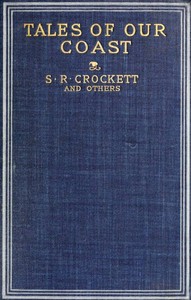
Tales of Our Coast — Reading Companion can be approached with a clearer sense of reading commitment from its source measurements: 31,657 words, 2 hr 18 min estimated reading time, and 3 detected text sections.
The text analysis averages about 20.8 words per sentence, while the detected sections provide another way to judge how the source is divided.
Project Gutenberg metadata also associates the work with “Short stories,” connecting these edition facts with the source record’s subject description.
Explore this collection
These alternatives are selected using recorded categories and estimated reading time.
About 185 minutes
Historical Psychological Social Fiction
42,519 recorded words. 47 minutes difference from this book's estimate.
View Gutenberg source #54470About 187 minutes
Historical Psychological Social Fiction
42,934 recorded words. 49 minutes difference from this book's estimate.
View Gutenberg source #39644About 88 minutes
Historical Psychological Social Fiction
20,020 recorded words. 50 minutes difference from this book's estimate.
View Gutenberg source #2599Search stored excerpts and compare books → Choose by your preferences →
Choices use stored catalog measurements. Estimates vary with reading speed. A shared category is a catalog label, not a claim that two books have the same argument or literary quality.
Search reads excerpt text stored with this catalog and links to its associated Gutenberg record. The connection is stored in the site database; this tool does not recheck that every excerpt is word-for-word identical to that external record. Excerpt search does not cover every chapter and does not verify historical publication dates.
Catalog snapshot checked: 2026-09-25. Coverage: 100 public books, 100 available source excerpts.
Read the complete public-domain text at its original source.
Read on Project GutenbergThe five tales in this collection share a coastal setting but diverge sharply in voice and region. S. R. Crockett's opening story, 'The Smugglers of the Clone,' uses dense Scots dialect and a young narrator's eager, fearful perspective: 'Rise, Robin, rise! The partans are on the sands!' The mother's repeated prayer—'Save the laddie'—and the father's practical advice about grappling chains and avoiding the magistrate establish a tension between domestic piety and illicit trade. Gilbert Parker's 'The Path of Murtogh' shifts to an Irish coastal fortress, where a Spanish envoy and a lady negotiate with the chieftain Murtogh in a scene thick with political and romantic intrigue. The lady's description of Murtogh as 'a fool' who 'believes that I am a saint' reveals a manipulative dynamic beneath the surface of courtly speech.
Crockett's story relies on a thick Scots vocabulary that immediately anchors the reader in a specific coastal community. Words like 'partans' (crabs), 'wake-rife' (awake), 'siller' (silver), 'graith' (harness), 'lingtow' (rope), and 'jockteleg' (clasp knife) are not decorative but functional, conveying the material world of smuggling. The father's instructions—'dinna let them clatter till ye hae the stuff weel up the hill'—blend urgency with local idiom. In contrast, Parker's narrative uses a more formal English, with the lady's speech switching between Irish and English, and the Spaniard's florid declarations: 'Oh, rapturous vision!' The contrast suggests that dialect is not merely local color but a tool for characterizing social worlds: Crockett's smugglers are embedded in a community with its own codes, while Parker's characters operate in a realm of political calculation and performative romance.
The shoreline in these stories is neither a picturesque backdrop nor a clear boundary. It is a zone where legality and survival blur. In Crockett's tale, the father's advice to 'keep your head doon, an' gae by withoot lookin'' when encountering the magistrate Sir William reveals a tacit understanding between authorities and free-traders: 'He's a magistrate, ye ken. But he'll no' see you, gin ye dinna see him.' The sea itself is a source of livelihood and danger, as the mother's prayer suggests. In Parker's story, the coast is a site of exile and intrigue: the lady describes her situation as 'this awful dungeon,' and Murtogh's stronghold is isolated from both English and Spanish forces. The sea offers escape or reinforcement, but the characters remain trapped in a web of vows, promises, and deceptions. The coast, then, is a liminal space where moral certainties dissolve.
The collection employs varied narrative strategies that shape how the reader interprets events. Crockett uses a first-person narrator looking back on his youth, creating a double perspective: the eager boy who feels 'pride' and 'a beating heart' contrasts with the older narrator who may view the smuggling with more complexity. The mother's prayer and father's counsel frame the adventure within a domestic anxiety that the young protagonist does not fully share. In Parker's story, the narrative is largely third-person but focalized through the lady's manipulative consciousness. Her internal thoughts—'I have held the fierce beast at arm's length, because he is also a fool'—undermine her spoken words to Murtogh and the Spaniard. The reader is thus positioned as a confidant to her schemes, aware of the gap between performance and intention. These narrative layers invite scrutiny of how coastal tales are told and whose version of events we trust.
Readers may find it useful to attend to the shifts in register and narrative distance across the five stories. Crockett's dense Scots demands patience but rewards with a vivid sense of place; Parker's more polished prose conceals a cynical undercurrent. The collection as a whole resists a single interpretation of coastal life, instead offering a mosaic of voices—smugglers, rebels, lovers, and survivors—each with their own relationship to the sea and its laws.
Sometimes a place holds us more than any plot, and those coast stories stayed with me like salt on skin. That edge of ambiguity—the sea as both witness and accomplice—lingers. I felt something similar reading Sylph Etherege (From: "The Snow Image and Other Twice-Told Tales") — Reading Companion, where a quiet character drifts through her world, gently unsettled, leaving you wondering about the tides beneath her words.
Save your reaction, strongest insight, and memorable passage.