About 263 minutes
Zut, and Other Parisians — Story, Setting & Ideas
Historical Psychological Social Fiction
60,355 recorded words. 1 minutes difference from this book's estimate.
View Gutenberg source #43216
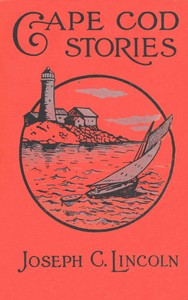
For Cape Cod Stories — Context and Discussion, the stored edition analysis reports 60,645 words, 4 hr 24 min estimated reading time, and 6 detected text sections.
The text analysis averages about 15.1 words per sentence, while the detected sections provide another way to judge how the source is divided.
Project Gutenberg metadata also associates the work with “Short stories, American,” connecting these edition facts with the source record’s subject description.
Explore this collection
These alternatives are selected using recorded categories and estimated reading time.
About 263 minutes
Historical Psychological Social Fiction
60,355 recorded words. 1 minutes difference from this book's estimate.
View Gutenberg source #43216About 266 minutes
Historical Psychological Social Fiction
61,101 recorded words. 2 minutes difference from this book's estimate.
View Gutenberg source #31857About 271 minutes
Historical Psychological Social Fiction
62,324 recorded words. 7 minutes difference from this book's estimate.
View Gutenberg source #32382Search stored excerpts and compare books → Choose by your preferences →
Choices use stored catalog measurements. Estimates vary with reading speed. A shared category is a catalog label, not a claim that two books have the same argument or literary quality.
Search reads excerpt text stored with this catalog and links to its associated Gutenberg record. The connection is stored in the site database; this tool does not recheck that every excerpt is word-for-word identical to that external record. Excerpt search does not cover every chapter and does not verify historical publication dates.
Catalog snapshot checked: 2026-09-25. Coverage: 100 public books, 100 available source excerpts.
Read the complete public-domain text at its original source.
Read on Project GutenbergThe first story, 'Two Pairs of Shoes,' introduces Barzilla Wingate and Cap'n Jonadab Wixon through a thick coastal dialect: 'I was propping up the stove with my feet and holding down a chair with the rest of me.' The narrative voice is immediate and colloquial, with nautical metaphors woven into everyday speech—'heaves alongside flying distress signals,' 'coming to anchor with a flop.' This voice carries throughout the collection, but its pace changes markedly. In the opening, banter dominates: 'Ily' Tucker's teasing about unopened letters. Later, in 'The Mark on the Door,' the same speaker recounts a tense, slow-burn revenge on a wealthy yachtsman, Allie Davidson. The shift from leisurely gossip to deliberate, almost cold narration—'I slowed 'way down and backed off'—shows Lincoln varying pace to match stakes.
Lincoln’s narrators speak a dense Cape Cod vernacular that does more than flavor the text—it establishes social hierarchy and local identity. In 'Two Pairs of Shoes,' Barzilla describes a foreign envelope: 'a kind of picture thing in colors, with some printing in a foreign language underneath it. I b'lieve 'twas what they call a “coat-of-arms,” but it looked more like a patchwork comforter.' The simile undercuts aristocratic pretension through a domestic, practical lens. The dialect is consistent but not uniform: when Barzilla recounts the weir-pole incident, his syntax tightens. 'I struck out. He yelled to me not to leave him, but the weir had give me my bearings.' The dropped auxiliary verbs and clipped clauses mirror physical urgency. Lincoln uses dialect not as a static marker but as a flexible tool that adapts to narrative mood—gossipy in group scenes, terse in solitary action.
The weir-pole story in 'The Mark on the Door' demonstrates Lincoln’s control of narrative tempo. The setup is leisurely: Barzilla describes the weir, the power-boat, the rescue of Allie from a previous prank. Then the pace slows to a deliberate crawl: 'So instead of running in after him, I slowed 'way down and backed off.' The repetition of 'slow' and the pause before dialogue—'“Come here!” he yells'—create a held breath. Barzilla’s internal calculation is laid out in short, declarative sentences: 'He was four feet above water, 'twas full tide then, and if he set still he was safe as a church.' The moral arithmetic is cold, and the prose mirrors that detachment. When he leaves Allie on the pole, the narration accelerates again: 'I went back to the launch, pulled up her anchor and took her in tow.' The shift from stillness to motion underscores the finality of the act.
Lincoln threads small, concrete objects through the stories to anchor emotional weight. In 'Two Pairs of Shoes,' a mysterious envelope with sealing wax and a coat-of-arms triggers the plot. In 'The Mark on the Door,' a chalk mark on a door symbolizes a debt to be paid. The weir-pole itself becomes a stage for reckoning: 'you look a good deal handsomer up there than you do in a boat.' The repetition of 'pole' and 'door' as sites of confrontation gives the collection a structural echo. These objects are never merely decorative—they are nodes where voice and pace converge. The envelope is passed hand to hand, described in precise, puzzled detail. The chalk mark is wiped away only after the debt is settled. Lincoln’s narrators dwell on these items, slowing the narrative to examine them, then release them when the story’s tension resolves.
Readers will find that Lincoln’s stories reward attention to the spaces between dialogue—the moments when a narrator pauses to describe a seal, a boat, or a coat-of-arms. The dialect may initially seem dense, but its rhythms become familiar, and its shifts in speed signal where the emotional center lies. The collection is best read as a sequence of voices circling similar themes: pride, revenge, and the quiet dignity of local knowledge.
Reading Barzilla’s weir-pole revenge, I felt that old ache of a man caught between who he is and who he pretends to be. It’s the same quiet tension I sense in Those Times and These—the past never really leaves, just waits for a still moment. That book lingers like a familiar knot of Those Times and These — Key Ideas to Explore long after the page turns.
Answer a few questions and save a private reflection on this device.