About 28 minutes
Solander's Radio Tomb — A Closer Reading
Science Fiction Utopias
6,236 recorded words. 3 minutes difference from this book's estimate.
View Gutenberg source #26856
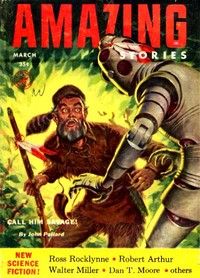
The source record for Ring Once for Death — Themes and Context measures this digital text at 7,005 words, 31 min estimated reading time, and 1 detected text section.
The text analysis averages about 12.4 words per sentence, while the detected sections provide another way to judge how the source is divided.
Project Gutenberg metadata also associates the work with “Short stories,” connecting these edition facts with the source record’s subject description.
Explore this collection
These alternatives are selected using recorded categories and estimated reading time.
About 28 minutes
Science Fiction Utopias
6,236 recorded words. 3 minutes difference from this book's estimate.
View Gutenberg source #26856About 26 minutes
Science Fiction Utopias
5,922 recorded words. 5 minutes difference from this book's estimate.
View Gutenberg source #23167About 25 minutes
Science Fiction Utopias
5,576 recorded words. 6 minutes difference from this book's estimate.
View Gutenberg source #9203Search stored excerpts and compare books → Choose by your preferences →
Choices use stored catalog measurements. Estimates vary with reading speed. A shared category is a catalog label, not a claim that two books have the same argument or literary quality.
Search reads excerpt text stored with this catalog and links to its associated Gutenberg record. The connection is stored in the site database; this tool does not recheck that every excerpt is word-for-word identical to that external record. Excerpt search does not cover every chapter and does not verify historical publication dates.
Catalog snapshot checked: 2026-09-25. Coverage: 100 public books, 100 available source excerpts.
Read the complete public-domain text at its original source.
Read on Project GutenbergThe story opens with a precise, almost tactile description of Sam Kee's shop on Mott Street, unchanged after twenty years. The prose lingers on "dusty jars of ginseng root and tigers' whiskers" and "little bronze Buddahs," establishing a setting where the exotic and the mundane coexist. This attention to sensory detail—the dust, the gimcracks mixed with fine jade—grounds the supernatural elements that follow in a world of tangible objects.
The dialogue immediately reveals character: Edith's pleasure at the shop's stasis, Mark's wry reference to "scientific stories," and Sam Kee Jr.'s wry acknowledgment that customers find flowery speech "quaint." These exchanges are not mere exposition; they establish a naturalistic voice that makes the later horror more jarring.
The rose-crystal bell is introduced with deliberate ambiguity. Edith seizes on it as a perfect anniversary present, but Sam Kee Jr. warns it is "not complete"—the clapper is missing. The bell's materiality is emphasized: it is "the size of a pear," carved from crystal, and when later rung, it produces a sound "like a silver knife." The narrative never confirms whether the bell has power; instead, it presents a series of coincidences that characters interpret supernaturally. Mark's skepticism is voiced early: "If someone hadn't told us Sam Kee was dead, I'd believe we'd stepped back twenty years in time." This line foreshadows the story's central tension between rational explanation and eerie possibility.
Arthur's word choices create a mounting sense of unease. When Mark returns from identifying a body, his voice is described as "a monotone." The taxi driver "pretended to doze," a small detail that isolates the couple in their grief. The bell's ring is "eerie" and "thin," penetrating the silence. The phrase "fingers of horror drew themselves down his spine" is a rare overt gesture toward the gothic, but it is earned by the preceding restraint. The dialogue remains naturalistic even in crisis: Edith's desperate "I'm going to ring it" and Mark's plea "If you've ever loved me, listen to me" feel like real speech under pressure.
The plot hinges on a case of mistaken identity—the burned body is not David but his friend Pete, who borrowed David's car and license. This revelation is withheld until the final pages, forcing the reader to share the parents' false certainty. The story's structure mirrors the characters' emotional arc: from hope (the bell might work) to horror (the bell might be real) to relief (the bell is just a bell) and finally to a darker irony (Mark's death, possibly caused by the bell). The narrative does not explicitly state that the bell killed Mark; it simply shows him lying with the bell beneath him. This restraint is the story's most effective device.
The point of view shifts subtly between Mark and Edith, but the reader is never given access to the bell's true nature. The story remains firmly grounded in the characters' perceptions. When Edith rings the bell and calls David's name, the text reports her actions without comment. The final line—"The crystal bell had been beneath him"—is delivered with flat finality. The story refuses to explain, leaving the reader to weigh the evidence. This ambiguity is reinforced by the opening description of the shop as a place where "the power of the old gods" is dismissed as nothing for a modern couple to worry about—a statement the story quietly undermines.
The story's two primary settings—Sam Kee's shop and the street outside the morgue—are rendered with contrasting detail. The shop is cluttered, warm, and nostalgic, filled with objects that invite touch. The morgue scene is stark: a taxi, a pavement, darkness. The bell moves between these spaces, carrying its ambiguity with it. The shop's owner, Sam Kee Jr., is depicted with a blend of American and Chinese traits, his dialogue shifting from colloquial to formal. This characterization avoids stereotype while acknowledging cultural difference. The setting is not merely backdrop; it is integral to the story's themes of memory, loss, and the persistence of the past.
Readers should attend to the story's careful calibration of doubt. Every supernatural event has a rational explanation—the bell's ring coinciding with David's arrival, the misidentification of the body—yet the final image of Mark dead with the bell beneath him resists easy dismissal. The story rewards attention to its precise language and the way it withholds judgment. It is a study in how horror can emerge from the ordinary, and how a single object can accumulate meaning through the characters' beliefs.
I remember the way my grandmother’s glass bell never rang, just sat heavy on the shelf, promising something I couldn’t name. That same hush lives in Ring Once for Death—the dread of a silent object. Reading it, I thought of the quieter ache in Love After Marriage; and Other Stories of the Heart — Background and Themes, where feelings wait, unspoken, until the small, unexplained moment shifts everything.
Build a private reading journal entry for this title.




![Cover of Heart of the West [Annotated] — Edition Insights](https://nceaa.com/storage/media/covers/pg13094.jpg)