About 431 minutes
Famous Modern Ghost Stories — Context and Discussion
Science Fiction Utopias
99,050 recorded words. 22 minutes difference from this book's estimate.
View Gutenberg source #15143
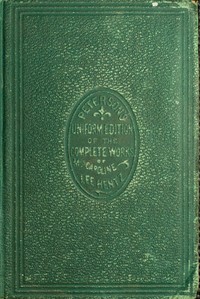
This digital edition of Love After Marriage; and Other Stories of the Heart — Background and Themes is described by source-level measurements including 104,111 words, 7 hr 33 min estimated reading time, and 9 detected text sections.
The text analysis averages about 21.9 words per sentence, while the detected sections provide another way to judge how the source is divided.
Project Gutenberg metadata also associates the work with “Fiction,” connecting these edition facts with the source record’s subject description.
Explore this collection
These alternatives are selected using recorded categories and estimated reading time.
About 431 minutes
Science Fiction Utopias
99,050 recorded words. 22 minutes difference from this book's estimate.
View Gutenberg source #15143About 410 minutes
Science Fiction Utopias
94,137 recorded words. 43 minutes difference from this book's estimate.
View Gutenberg source #2809About 400 minutes
Science Fiction Utopias
91,895 recorded words. 53 minutes difference from this book's estimate.
View Gutenberg source #29621Search stored excerpts and compare books → Choose by your preferences →
Choices use stored catalog measurements. Estimates vary with reading speed. A shared category is a catalog label, not a claim that two books have the same argument or literary quality.
Search reads excerpt text stored with this catalog and links to its associated Gutenberg record. The connection is stored in the site database; this tool does not recheck that every excerpt is word-for-word identical to that external record. Excerpt search does not cover every chapter and does not verify historical publication dates.
Catalog snapshot checked: 2026-09-25. Coverage: 100 public books, 100 available source excerpts.
Read the complete public-domain text at its original source.
Read on Project GutenbergThe title story opens with a stranger entering a parlour where two young ladies sit, one by the fire. The scene quickly shifts to a post-ballroom aftermath, where Ellen Loring, a belle, vents her disappointment at not being the sole center of admiration. Her companion Agnes bears the brunt of her reproaches in silence, eating the bread of dependence. The narrator then steps in with a direct moral commentary, contrasting Ellen's lack of spiritual reflection with the implied ideal of piety. This pattern—vivid social scenes followed by explicit moralizing—sets the tone for the collection.
The excerpt from 'Love After Marriage' establishes a clear moral framework through contrast. Ellen Loring is described as having been educated solely for the circles of fashion, to glitter and be admired. The narrator condemns her as living in practical atheism, having robbed her soul of sacred treasures. In contrast, Agnes, though silent and dependent, is implicitly the moral center. The narrator's direct address—asking whether guardian angels hovered over Ellen's couch—signals that the reader is expected to judge the characters' spiritual states. This binary of worldly versus pious is a recurring device in Hentz's stories, as seen in the table of contents with titles like 'The Victim of Excitement' and 'The Fatal Cosmetic.'
Hentz's narrator does not remain invisible. In the opening, after describing Ellen's tantrum, the narrator interjects with a lengthy reflection on her lack of prayer and her disregard for the judgment beyond the grave. This voice is authoritative and didactic, using biblical allusions such as the king of Babylon and the writing on the wall. The narrator also employs rhetorical questions, like 'Can we suppose that guardian angels hovered over the couch?' This technique guides the reader's interpretation explicitly, leaving little ambiguity about the moral lesson. The later excerpt, beginning with 'It was the afternoon of a mild summer's day,' suggests a shift to a more pastoral setting, but the narrator's presence likely remains strong throughout.
Several images recur in the opening excerpt that may appear across the collection. The cold and comfortless room, the long gloomy wick, and the scattered flowers and dress all symbolize Ellen's inner emptiness. The contrast between her brilliant appearance at the ball and her disheveled state afterward underscores the theme of disillusionment. The 'fatal cosmetic' and 'bosom serpent' from the story titles hint at similar symbolic objects. The bracelet and reticule mentioned in later titles suggest that material items often carry moral weight. Readers should watch for how objects like dresses, flowers, or cosmetics are used to reveal character flaws or trigger consequences.
The table of contents lists thirteen stories, with 'Love After Marriage' first. The titles suggest a range of domestic and moral tales: 'The Blind Girl's Story,' 'The Shaker Girl,' 'The Village Anthem.' The phrase 'Stories of the Heart' in the subtitle indicates an emphasis on emotional and moral interiority. The opening story's length (starting at page 17) and its thematic focus on marriage and vanity likely set the stage for the rest. The later excerpt beginning with a summer afternoon may come from a different story, perhaps 'A Rainy Evening' or 'Three Scenes in the Life of a Belle.' Readers can expect each story to follow a similar pattern: a vivid scene, a moral crisis, and a didactic resolution.
As you read, note how Hentz balances entertainment with instruction. The stories are short, often centered on a single moral flaw or virtue. Pay attention to the narrator's asides, which reveal the author's perspective on fashion, religion, and gender roles. The collection offers a window into mid-19th century American domestic fiction, where the heart's struggles are laid bare for the reader's edification.
I’ve often lingered over how Hentz’s gentle moral weight echoes through the rooms of Children of the Tenements — Themes and Context. They share that quiet ache—how hearts grow sturdy inside hard lives. Each finds grace in restraint, never shouting its lessons, just whispering them, like old friends remembering the same rainy afternoon.
Answer a few questions and save a private reflection on this device.





![Cover of Heart of the West [Annotated] — Edition Insights](https://nceaa.com/storage/media/covers/pg13094.jpg)