About 271 minutes
In a steamer chair, and other shipboard stories — Context and Discussion
Adventure Picaresque Fiction
62,106 recorded words. 7 minutes difference from this book's estimate.
View Gutenberg source #9309
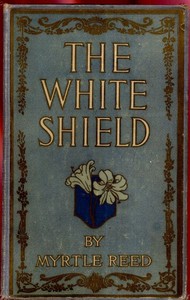
For The White Shield — Themes and Context, the stored edition analysis reports 60,565 words, 4 hr 24 min estimated reading time, and 8 detected text sections.
The text analysis averages about 15.8 words per sentence, while the detected sections provide another way to judge how the source is divided.
Project Gutenberg metadata also associates the work with “Fiction,” connecting these edition facts with the source record’s subject description.
Explore this collection
These alternatives are selected using recorded categories and estimated reading time.
About 271 minutes
Adventure Picaresque Fiction
62,106 recorded words. 7 minutes difference from this book's estimate.
View Gutenberg source #9309About 271 minutes
Adventure Picaresque Fiction
62,202 recorded words. 7 minutes difference from this book's estimate.
View Gutenberg source #34365About 289 minutes
Adventure Picaresque Fiction
66,387 recorded words. 25 minutes difference from this book's estimate.
View Gutenberg source #15933Search stored excerpts and compare books → Choose by your preferences →
Choices use stored catalog measurements. Estimates vary with reading speed. A shared category is a catalog label, not a claim that two books have the same argument or literary quality.
Search reads excerpt text stored with this catalog and links to its associated Gutenberg record. The connection is stored in the site database; this tool does not recheck that every excerpt is word-for-word identical to that external record. Excerpt search does not cover every chapter and does not verify historical publication dates.
Catalog snapshot checked: 2026-09-25. Coverage: 100 public books, 100 available source excerpts.
Read the complete public-domain text at its original source.
Read on Project GutenbergThe White Shield collects twenty-two short stories originally published in magazines such as Munsey's Magazine and The Smart Set. The preface praises Reed's "quick transition from pathos to humour" and "wholesome sentiment," but the stories themselves reveal a more varied range. In "Swing Low, Sweet Chariot," a spiritual sung by mandolin-accompanied voices brings an old man to a peaceful death, while "The Face of the Master" follows a boy named Pedro whose first encounter with a violin chord sparks an artistic vision. These two excerpts alone show Reed moving between sentimental deathbed scenes and the psychological awakening of a child artist.
Music appears repeatedly as a catalyst for emotional or spiritual change. In "Swing Low, Sweet Chariot," the familiar hymn performed by "fresh young voices" and mandolins transports Uncle Joe from pain to a vision of angels: "the chariot came, and Uncle Joe forgot the 'misery' and the roses alike." The song is described with rhythmic, almost hypnotic repetition of its lyrics, mirroring the old man's fading consciousness. In contrast, "The Face of the Master" treats music as a revelation. Pedro, a boy who has never heard a violin played properly, is stunned by a single chord: "Faulty though the touch was, the answer was melody—a long sweet chord." The narrator compares his insight to a sculptor seeing a statue in stone, emphasizing that even imperfect sound can unlock artistic vision. These two stories use music to opposite ends—one to ease death, the other to ignite life—but both treat it as a force that transcends ordinary experience.
The preface claims Reed's mission was "largely one of comfort to the suffering and the sorrowing," and the excerpts bear this out. In "Swing Low, Sweet Chariot," the dying Uncle Joe is described with physical detail—"the old grey head turned feebly on its hard pillow"—and his release is framed as a merciful passage. The story ends with him "passing from supreme shadow to supreme dawn," a phrasing that blends religious consolation with natural imagery. Yet not all suffering is so gently resolved. In "The Face of the Master," Pedro endures a blow from his stepfather and is locked in a room after accidentally breaking a piece of wood. The narrative notes his "instinctive dislike" of the old man and his memory of a neighbor giving him candy, small details that accumulate into a portrait of a lonely, mistreated child. Reed does not dwell on the cruelty but uses it to heighten the contrast with the beauty of the violin sound that follows.
Two motifs appear in both excerpts: roses and light. In "Swing Low, Sweet Chariot," roses fall in a "fragrant shower" around Uncle Joe, and he presses "a great white rose" to his lips before dying. The rose is both a sensory detail and a symbol of the comfort that surrounds his end. In "The Face of the Master," light imagery dominates Pedro's moment of revelation: "in his soul was the dawn of unspeakable light." The word "dawn" echoes the "supreme dawn" of the earlier story, linking the two tales despite their different tones. The preface also mentions "the gladsome light of unfailing love," suggesting that Reed consciously used light as a positive emblem. These repeated images—white roses, dawn, light—create a consistent emotional vocabulary across the collection, even when the stories vary in plot and mood.
Readers approaching The White Shield should expect a mix of sentimental and more psychologically nuanced stories. The catalog subjects list "Love stories, American" and "Short stories, American," but the excerpts show that Reed's interests extend beyond romance to include artistic awakening, deathbed scenes, and childhood hardship. Pay attention to how she uses music and sensory details to shape emotional arcs, and note that the preface's emphasis on comfort may not fully prepare you for the darker moments in stories like "The Face of the Master."
In The White Shield, Myrtle Reed’s roses and music linger like a half-remembered song. I’ve often found that same quiet ache of transformation waiting between the pages of Waifs and strays [part 1] — Themes and Context—both feel like old friends who understand why a heart shifts slowly, in the hush after a chord fades.
Build a private reading journal entry for this title.
![Cover of Waifs and strays [part 1] — Themes and Context](https://nceaa.com/storage/media/covers/pg2295.jpg)