About 333 minutes
Rolling Stones — Themes and Context
Science Fiction Utopias
76,389 recorded words. 4 minutes difference from this book's estimate.
View Gutenberg source #3815
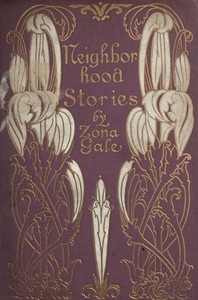
The catalog record for Neighborhood Stories — Story, Setting & Ideas provides practical reading context through 75,641 words, 5 hr 29 min estimated reading time, and 8 detected text sections.
The text analysis averages about 17.1 words per sentence, while the detected sections provide another way to judge how the source is divided.
Project Gutenberg metadata also associates the work with “Short stories, American,” connecting these edition facts with the source record’s subject description.
Explore this collection
These alternatives are selected using recorded categories and estimated reading time.
About 333 minutes
Science Fiction Utopias
76,389 recorded words. 4 minutes difference from this book's estimate.
View Gutenberg source #3815About 362 minutes
Science Fiction Utopias
83,036 recorded words. 33 minutes difference from this book's estimate.
View Gutenberg source #45320About 376 minutes
Science Fiction Utopias
86,272 recorded words. 47 minutes difference from this book's estimate.
View Gutenberg source #13094Search stored excerpts and compare books → Choose by your preferences →
Choices use stored catalog measurements. Estimates vary with reading speed. A shared category is a catalog label, not a claim that two books have the same argument or literary quality.
Search reads excerpt text stored with this catalog and links to its associated Gutenberg record. The connection is stored in the site database; this tool does not recheck that every excerpt is word-for-word identical to that external record. Excerpt search does not cover every chapter and does not verify historical publication dates.
Catalog snapshot checked: 2026-09-25. Coverage: 100 public books, 100 available source excerpts.
Read the complete public-domain text at its original source.
Read on Project GutenbergZona Gale's Neighborhood Stories opens with a preface that immediately establishes its central tension: the blunt, sometimes bitter speech of village life versus an underlying faith in neighborly goodwill. The narrator, Calliope Marsh, declares that when she dies, she doesn't want anyone who has “always treated me like a dog” seated prominently—then immediately retracts, insisting she doesn't care where they sit. This self-correcting impulse, both candid and generous, sets the tone for stories that probe the gap between surface judgments and deeper realities.
Cataloged under Science Fiction & Utopias, the book contains no speculative elements in the excerpts. Instead, it offers a realistic, affectionate portrait of early twentieth-century Middle Western village life, with a utopian thread only in its aspiration for greater human connection.
The excerpts are dominated by the first-person narration of Calliope Marsh, whose speech is richly idiomatic and self-aware. She uses homely metaphors—“like a waterfall with its expression blowing sideways”—and a rhythm that mimics oral storytelling. Her language is peppered with colloquial interjections (“Shucks!”) and biblical allusions (Deborah, Abraham's gourd), blending the mundane with the elevated. This voice is not merely decorative; it carries the book's thematic weight. Calliope's monologue during a flood relief effort reveals her habit of questioning received wisdom: “Why does it take trouble to bring it out?” she asks of compassion. The dialect is specific to the region and period, grounding the stories in a particular social and geographic milieu.
A flood forces villagers to see each other anew. Calliope catalogs the unnoticed lives of neighbors: Tippie the drayman, who for twelve years moved her refrigerator and stove, is revealed to have a wife with a cameo pin and three children; Mamie Felt, who does up lace curtains, supports an old mother and a cripple brother; Absalom Ricker's mother mourns a coral pin left behind on the Flats. The disaster strips away the habitual indifference of daily life, exposing the rich, private histories of people previously seen only as functionaries. Calliope's improvised prayer—“Lord, we thank thee for letting us see them, close up to”—frames the flood not as tragedy but as an occasion for empathy. The excerpt suggests that the collection uses crises, natural or social, to reveal the hidden complexity of village relationships.
Despite its cataloging as Science Fiction & Utopias, Neighborhood Stories contains no futuristic or speculative elements in the provided text. The utopian dimension is instead a moral one: Calliope articulates a vision of proactive compassion. She wonders why sympathy only emerges during trouble and asks, “when we get to working as hard to keep things from happening as we work when it's happened, won't living be fun?” The preface similarly argues that the village's “faint feuds” and “narrow judgments” are superficial, born of circumscription rather than malice. Gale presents the Middle Western village as a place where the Zeitgeist is present, where new ideals about home and community are emerging. The utopia is not a place but a potential—a way of seeing and responding to others that the stories aim to cultivate.
Readers should approach Neighborhood Stories as a series of linked character studies rather than a plotted novel. Pay attention to how Gale uses dialect not just for local color but as a vehicle for philosophical inquiry. The preface's dedication “To the little towns of the time to come” hints at the author's reformist hopes, but the excerpts ground these hopes in concrete, often comic, human interactions. The book rewards attention to small details—a cameo pin, a sunken biscuit, a coral pin with a dog—that carry emotional weight far beyond their size.
There are moments in Zona Gale’s little village when a porch light left on says more than any sermon, and I find myself thinking of that quiet warmth when I revisit the dusty trails in Heart of the West [Annotated] — Edition Insights. Both feel like old photographs, slightly faded, where the faces still hold their secrets. It’s a comfortable kind of loneliness, remembering them.
Save your reaction, strongest insight, and memorable passage.




![Cover of Heart of the West [Annotated] — Edition Insights](https://nceaa.com/storage/media/covers/pg13094.jpg)