About 27 minutes
G-r-r-r...! — Context and Discussion
Fantasy Juvenile Worlds
5,983 recorded words. 1 minutes difference from this book's estimate.
View Gutenberg source #29194
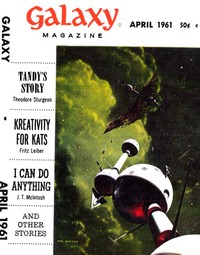
For Kreativity For Kats — Context and Discussion, the stored edition analysis reports 6,425 words, 28 min estimated reading time, and 1 detected text section.
The text analysis averages about 20.7 words per sentence, while the detected sections provide another way to judge how the source is divided.
Project Gutenberg metadata also associates the work with “Short stories,” connecting these edition facts with the source record’s subject description.
Explore this collection
These alternatives are selected using recorded categories and estimated reading time.
About 27 minutes
Fantasy Juvenile Worlds
5,983 recorded words. 1 minutes difference from this book's estimate.
View Gutenberg source #29194About 26 minutes
Fantasy Juvenile Worlds
5,814 recorded words. 2 minutes difference from this book's estimate.
View Gutenberg source #28119About 25 minutes
Fantasy Juvenile Worlds
5,567 recorded words. 3 minutes difference from this book's estimate.
View Gutenberg source #28644Search stored excerpts and compare books → Choose by your preferences →
Choices use stored catalog measurements. Estimates vary with reading speed. A shared category is a catalog label, not a claim that two books have the same argument or literary quality.
Search reads excerpt text stored with this catalog and links to its associated Gutenberg record. The connection is stored in the site database; this tool does not recheck that every excerpt is word-for-word identical to that external record. Excerpt search does not cover every chapter and does not verify historical publication dates.
Catalog snapshot checked: 2026-09-25. Coverage: 100 public books, 100 available source excerpts.
Read the complete public-domain text at its original source.
Read on Project GutenbergFritz Leiber's "Kreativity For Kats" opens with the kitten Gummitch peering into a bowl of water, studying the "molten silver image of the sun" and the "mirror cat" below. The story quickly establishes a central tension: Gummitch's elaborate theories about water mirrors as "holes or pits in the world, leading down to a spirit infinity" versus the humans' mundane concerns. The narrative voice blends feline speculation with dry human commentary, as when Old Horsemeat observes Gummitch's water-play and redefines it as "water sculpture." This collision of perspectives—the cat's earnest metaphysics and the humans' bemused interpretation—drives the story's humor and its quiet meditation on what constitutes art.
Gummitch distinguishes sharply between glass mirrors and water mirrors. Glass mirrors open into an "upright" spirit world sharing our gravity, while water mirrors have "reverse gravity"—one looks down into them, but the spirit-doubles look up. He speculates whether plunging into such a pit would mean falling forever, a thought that may explain cats' caution about swimming. The looking glass on Kitty-Come-Here's dressing table is an exception: it also has reverse gravity, but wind cannot enter it, unlike water mirrors where movement "rhythmically disturb[s]" the spirit world. Gummitch knows his paw does not change when he flicks the water, though its image bursts into fragments. This careful taxonomy—built from observation and logic—shows a mind treating everyday phenomena as data for a coherent system.
Kitty-Come-Here and Old Horsemeat react to Gummitch's water-play with a mix of bafflement and wonder. When Gummitch spills water and watches it flow, Old Horsemeat first says, "He's playing with it," then revises: "he's creating something. Silver mice. Water-snakes. Twinkling vines." Kitty-Come-Here objects that art "ought to last," but Old Horsemeat counters that "some of the best art forms are completely fugitive," citing improvisation in music and dance. Their dialogue reveals a shift from seeing the cat's behavior as mere play to recognizing it as a deliberate, if ephemeral, creative act. Yet the story undercuts this insight with Kitty-Come-Here's final worry about Gummitch drinking from the toilet, grounding the lofty discussion in domestic reality.
Gummitch himself makes a "characteristically sharp distinction": there is "the sacred water, the sparklingly clear water to create with," and "the water with character, the water to drink." This division explains his rejection of Kitty-Come-Here's offerings—bottled water, rose petals, vanilla extract, soda water—and his preference for toilet water, which presumably has more "character." The story ends with Gummitch oversetting his bowl and pursuing the "silver streams alive with suns," untroubled by questions of artistic value. His contentment contrasts with the humans' lingering doubts about permanence and propriety, suggesting that for the cat, the act of creation is its own justification.
Readers may find the story's pleasure in its precise, deadpan rendering of a cat's worldview—a worldview that treats water mirrors as spirit pits and spilled water as raw material for art. The humans' gradual, imperfect understanding mirrors our own attempt to grasp a nonhuman intelligence. Pay attention to the small details: the way Gummitch "mewed faintly in excitement" while following the water, or how Old Horsemeat struggles to articulate "the artistic temperament and the need to dig for inspiration into the smelly fundamentals of life." These moments, not the plot, carry the story's weight.
I remember Gummitch’s watery worlds, how their beauty lived only for a moment. It reminds me of another quiet truth, found in A Protegee of Jack Hamlin's, and Other Stories — Background and Themes, about lives that leave no mark yet still shimmer. Both linger in my mind like dust in afternoon light, asking nothing of me.
Your answers remain private and are stored only in this browser.