About 215 minutes
Off-Hand Sketches, a Little Dashed with Humor — Text and Context
Fantasy Juvenile Worlds
49,443 recorded words. 13 minutes difference from this book's estimate.
View Gutenberg source #4624
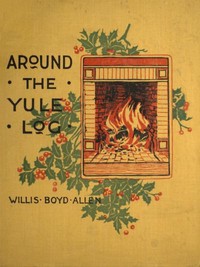
The catalog record for Around the Yule Log — A Closer Reading provides practical reading context through 46,394 words, 3 hr 22 min estimated reading time, and 7 detected text sections.
The text analysis averages about 21.4 words per sentence, while the detected sections provide another way to judge how the source is divided.
Project Gutenberg metadata also associates the work with “Fiction,” connecting these edition facts with the source record’s subject description.
Explore this collection
These alternatives are selected using recorded categories and estimated reading time.
About 215 minutes
Fantasy Juvenile Worlds
49,443 recorded words. 13 minutes difference from this book's estimate.
View Gutenberg source #4624About 172 minutes
Fantasy Juvenile Worlds
39,473 recorded words. 30 minutes difference from this book's estimate.
View Gutenberg source #50271About 166 minutes
Fantasy Juvenile Worlds
37,983 recorded words. 36 minutes difference from this book's estimate.
View Gutenberg source #15230Search stored excerpts and compare books → Choose by your preferences →
Choices use stored catalog measurements. Estimates vary with reading speed. A shared category is a catalog label, not a claim that two books have the same argument or literary quality.
Search reads excerpt text stored with this catalog and links to its associated Gutenberg record. The connection is stored in the site database; this tool does not recheck that every excerpt is word-for-word identical to that external record. Excerpt search does not cover every chapter and does not verify historical publication dates.
Catalog snapshot checked: 2026-09-25. Coverage: 100 public books, 100 available source excerpts.
Read the complete public-domain text at its original source.
Read on Project GutenbergThe opening chapter, 'Around the Yule Log,' establishes a frame narrative of a family circle listening to tales by the fire, a setup that allows Allen to blend genres: a sentimental essay on Christmas, a realistic snowbound train story, and a folkloric chapter on Christmas customs. The second story, 'The Shadow of Christmas Present,' shifts abruptly to a blizzard on the Missouri plains, where the passenger Bob Estabrook's internal grumbling about a fellow traveler, Gertrude Raymond, reveals a tension between his misanthropic pose and his evident attraction. Allen's prose in this section is notably concrete, describing the train as 'a mere hyphen upon the broad, white page' of the landscape, and Bob's toilet as 'a sort of horizontal toilet' before he emerges 'his hair on end.'
The excerpts display two distinct registers. The first chapter uses an elevated, almost homiletic tone: 'Let us forgive our debtors this day as we would be forgiven; let no child's cry fall unheeded on our ears.' This contrasts sharply with the second story's wry, observational humor. Bob Estabrook's internal monologue—'confoundedly useless, like the rest of ’em'—and his awkward encounter with Miss Raymond, who appears 'sweet and rosy as a June morning' while he is disheveled, create a comic tension. The setting also shifts from a cozy fireside to a 'snowing, and snowing hard' prairie, where the wind 'howling, shrieking, racing madly to and fro' is personified as a 'pitiless, awful power.' This juxtaposition of domestic warmth and external danger is a structural pattern in the collection.
In 'The Shadow of Christmas Present,' Allen builds a romance through friction. Bob's initial misanthropy—'knocking his head savagely against the upper berth'—gives way to a reluctant fascination. The narrative notes that 'hours had slipped by like minutes' during conversations, yet Bob grumbles about 'fashionable young ladies.' Miss Raymond's 'demure' demeanor and 'sly glance at his hair' suggest a mutual awareness. Allen uses physical details—the frosty window, the cold berth, the 'masculine end of the car'—to ground the emotional tension. The crisis of the snowbound train, with dwindling wood and a council of war, forces proximity, but the excerpt ends before any resolution, leaving the reader to infer the developing bond.
The chapter 'Christmas Folk-Lore' (listed in the contents) and the opening essay indicate Allen's interest in the cultural and historical layers of Christmas. The first chapter invokes 'the yule log glows amain' and 'tales of olden time,' positioning the collection as a revival of communal storytelling. The narrator appeals to 'the delicate sensibilities of childhood' and the 'mysterious halo of light' surrounding the day. This folkloric impulse is balanced by the realistic details of the train story—'the fires in the locomotives had been suffered to go out'—suggesting that Allen uses the Christmas setting to explore both timeless traditions and contemporary, even gritty, American life.
Readers approaching Around the Yule Log should expect a mix of tones: the earnest, the humorous, and the folkloric. The collection rewards attention to how Allen shifts between these modes, sometimes within a single story. The train narrative, in particular, offers a more modern, character-driven tension than the opening essay might suggest. Pay attention to the recurring motif of cold and warmth—literal and emotional—as it ties the disparate pieces together.
That snowbound train in Around the Yule Log brought back a winter I once spent rereading ghost stories alone, fire low, tracing how loneliness can feel like a presence. The same hush settled over me then, the way a quiet room can hold more than silence. Masterpieces of Mystery in Four Volumes: Ghost Stories — A Reader’s Guide carried that same waiting quality, each tale a held breath under the roof of night.
Your answers remain private and are stored only in this browser.