D
David Brussat
Guest
- Thread Author
- #1
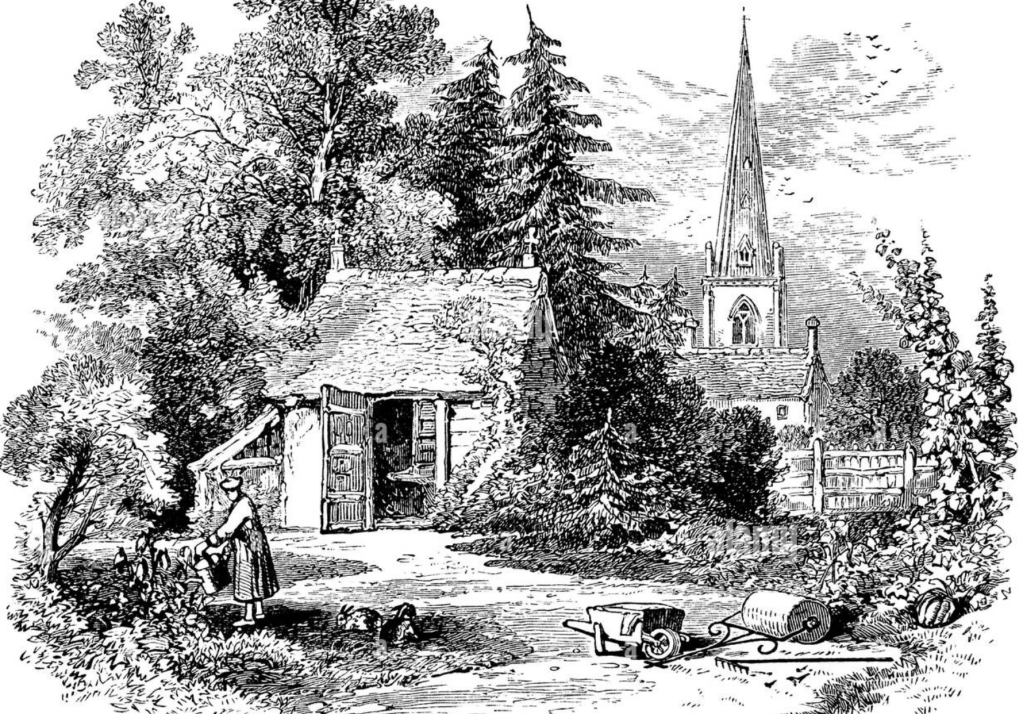
J. Austen’s ‘improvements’
I have come across in Jane Austen’s novel Mansfield Park an interesting passage in which she describes rival plans for improving a house in the “living” (meaning parsonage) of Thornton Lacey, a hamlet in the town of Northhamptonshire. They are not just rival plans, the plans are rivals for the affection of the novel’s protagonist, Fanny Price, who lives nearby and finds her cousin, Edmund Bertram, a potentially amiable match. Edmund is soon to take over as pastor of the village, a fate that faces Fanny with divided feelings – if that happens, she must live in the house under discussion between Edmund and Henry Crawford. Her feelings are decidedly undivided in her resistance to the fake romantic assault upon those feelings of Crawford, a recent guest at Mansfield Park who, unaware of Fanny’s true heart’s ambitions, is toying with her affections and has more ambitious ideas for how the parish house should be “improved.” (with someone else’s money, of course).
Here is the passage, with parts unrelated to the rival plans expurgated:
“Well,” continued Edmund, “and how did you like what you saw?”
“Very much indeed,” replied Crawford. “You are a lucky fellow. There will be work for five summers at least before the place is liveable.”
“No, no, not so bad as that. The farmyard must be moved, I grant you; but I am not aware of anything else. The house is by no means bad, and when the yard is removed, there may be a very tolerable approach to it.”
“The farmyard must be cleared away entirely, and planted up to shut out the blacksmith’s shop. The house must be turned to front the east instead of the north – the entrance and principle rooms, I mean, must be on that side, where the view is really very pretty; I am sure it may be done. And there must be your approach – through what is at present the garden. You must make a new garden at what is now the back of the house; which will be giving it the best aspect in the world – sloping to the south-east. The ground seems precisely formed for it. I rode fifty yards up the lane between the church and the house in order to look about me; and saw how it all might be. Nothing can be easier. The meadows beyond what will be the garden, as well as what now is, sweeping round from the lane I stood in to the north-east, that is, to the principal road through the village, must be all laid together of course; very pretty meadows they are, finely sprinkled with timber. They belong to the living, I suppose. If not you must purchase them. Then the stream – something must be done with the stream; but I could not quite determine what. I had two or three ideas.”
“And I have two or three ideas also,” said Edmund,”and one of them is that very little of your plan for Thornton Lacey will ever be put in practice. …”
As any reader can detect, Edmund has more modest plans for his living, plans that just happen to fit snugly along with Fanny’s plans for him. Crawford wants the parish residence to be fit for a man more ambitious than a mere parish priest. With half the book still to do, who’s willing to bet on the direction Fanny will eventually tilt (and probably already has)?
Last edited: