About 291 minutes
The Bell-Ringer of Angel's, and Other Stories — Reading Companion
Adventure Picaresque Fiction
66,736 recorded words. 1 minutes difference from this book's estimate.
View Gutenberg source #2676
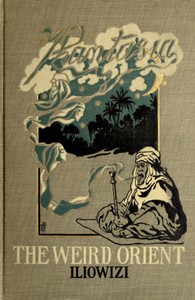
For The Weird Orient: Nine Mystic Tales — A Closer Reading, the stored edition analysis reports 67,155 words, 4 hr 52 min estimated reading time, and 8 detected text sections.
The text analysis averages about 26.3 words per sentence, while the detected sections provide another way to judge how the source is divided.
Project Gutenberg metadata also associates the work with “Short stories,” connecting these edition facts with the source record’s subject description.
Explore this collection
These alternatives are selected using recorded categories and estimated reading time.
About 291 minutes
Adventure Picaresque Fiction
66,736 recorded words. 1 minutes difference from this book's estimate.
View Gutenberg source #2676About 291 minutes
Adventure Picaresque Fiction
66,799 recorded words. 1 minutes difference from this book's estimate.
View Gutenberg source #29704About 290 minutes
Adventure Picaresque Fiction
66,676 recorded words. 2 minutes difference from this book's estimate.
View Gutenberg source #47721Search stored excerpts and compare books → Choose by your preferences →
Choices use stored catalog measurements. Estimates vary with reading speed. A shared category is a catalog label, not a claim that two books have the same argument or literary quality.
Search reads excerpt text stored with this catalog and links to its associated Gutenberg record. The connection is stored in the site database; this tool does not recheck that every excerpt is word-for-word identical to that external record. Excerpt search does not cover every chapter and does not verify historical publication dates.
Catalog snapshot checked: 2026-09-25. Coverage: 100 public books, 100 available source excerpts.
Read the complete public-domain text at its original source.
Read on Project GutenbergHenry Iliowizi's The Weird Orient: Nine Mystic Tales (1900) opens a window onto a narrative world where the supernatural and the everyday intertwine. The author, a Hebrew scholar and former missionary in Morocco, brings a specific cultural and linguistic lens to these stories. The excerpt from 'Solomon and the Mare' demonstrates a key authorial choice: granting voice to an abused horse, whose monologue becomes a vehicle for moral critique. This device allows Iliowizi to explore themes of suffering and justice through a non-human perspective, a technique that recurs throughout the collection.
The excerpt from 'Solomon and the Mare' is notable for its sustained first-person narration by a dying horse. The mare's speech is not a simple anthropomorphism; it is a carefully constructed indictment of human behavior. She recounts specific abuses: 'I have often been whipped and kicked by my cruel master,' and describes witnessing the slaughter of animals for food. The language is direct and accusatory, as when she states, 'Man is our devil, helpless, dumb animals that we are.' This choice to give an animal a voice that is both eloquent and bitter is a deliberate stylistic move, one that aligns the story with a tradition of moral fable while grounding it in visceral detail.
Iliowizi uses dialogue not merely to advance plot but to dramatize ideological conflict. In the excerpt, the mare's resigned wisdom clashes with her colt's fiery rebellion. The colt declares, 'I will kick right and left, break windows, bones, vehicles, break whatever comes in my way,' while the mare counsels patience, warning that 'a vicious horse... is sure to get his double share of torture.' This exchange creates a tension between passive endurance and active resistance, a dynamic that likely shapes other tales in the collection. The dialogue is also marked by a formal, almost biblical cadence, as in the mare's address: 'Child, never try it, if thou lovest me.'
Iliowizi's descriptive passages evoke an 'Oriental' atmosphere through specific, sensory details. The preface notes his residence in Morocco, and the stories are set in a vaguely defined East. In the excerpt, the setting is established through references to 'the king's bosom' and 'familiar notes' falling on Solomon's ear, grounding the tale in a legendary, biblical context. The description of the mare's suffering—'the heat by day and the cold by night, I endured; toiling, toiling under the rod'—uses repetition and parallel structure to create a rhythmic, almost incantatory effect. This style, blending naturalistic detail with a formal, elevated diction, is characteristic of the author's approach to the exotic locale.
The excerpt from 'Solomon and the Mare' functions as a moral argument against cruelty to animals, but it does so through narrative rather than direct sermonizing. The mare's speech includes a catalog of animal products—'The hen supplies him with her eggs, the cow with her milk and with butter and cheese, and the lamb with its wool'—to argue that humans have no need to kill for food. This rhetorical strategy, listing the gifts of nature, is a persuasive device that Iliowizi employs within the story's fictional frame. The colt's rebellion and the mare's cautionary tale about her own past violence—'I once made a wild break for deliverance... killing one and hurting others'—adds complexity, suggesting that resistance can lead to greater suffering. The moral is not simplistic but emerges from the characters' experiences.
Readers approaching The Weird Orient should attend to the ways Iliowizi blends folkloric motifs with a distinctive authorial voice. His background in Hebrew and Arabic, and his experience living in the East, inform the texture of these tales, but the stories themselves are literary constructions, not ethnographic reports. The excerpt from 'Solomon and the Mare' offers a useful entry point, revealing the author's interest in giving voice to the voiceless and his use of dialogue to explore ethical questions. The collection rewards attention to its narrative strategies and cultural references.
Reading the old tale of Solomon and his mare, I found myself oddly transported to a shelf of riddle stories, where every answer hides behind a question, much like the animals’ voices hid behind their silence. There’s a quiet kinship there. Masterpieces of Mystery in Four Volumes: Riddle Stories — Background and Themes holds a similar patience, waiting for the reader to notice the pattern beneath the surface—a gentle echo of lifting that strange, old book again.
Save your reaction, strongest insight, and memorable passage.
![Cover of Waifs and strays [part 1] — Themes and Context](https://nceaa.com/storage/media/covers/pg2295.jpg)