
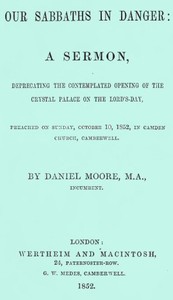
Our Sabbaths in Danger by Daniel Moore
Let's set the scene. It's the 1800s in Britain, and the Industrial Revolution is changing everything. Factories hum, trains connect cities faster than ever, and the idea of a 'weekend' is still taking shape. For generations, Sunday—the Sabbath—was different. It was a day for church, for family, and for quiet. No work, no commerce, just rest. But now, there's pressure. Railway companies want to run Sunday trains for profit and travel. Shopkeepers see a chance for more sales. Some people just want the freedom to use their day off as they please. Daniel Moore, a minister, sees this not as progress, but as a crisis. 'Our Sabbaths in Danger' is his heartfelt argument for preserving this sacred pause.
The Story
This isn't a novel with characters, but the 'story' is the debate itself. Moore lays out the case against the creeping commercialization of Sunday. He describes how Sunday trains disrupt the peace of the countryside and pull people away from their homes and churches. He worries about shop workers, especially the young, who would lose their one guaranteed day off. He argues that this shared day of rest is the glue that holds society together, giving everyone—rich and poor—an equal chance to recharge, reflect, and connect with family. The book is his attempt to rally people to defend this tradition before it's gone for good.
Why You Should Read It
You might think a 150-year-old book about Sunday laws would be dusty and irrelevant. I thought so too, but I was wrong. Moore's passion is contagious. Reading it feels like listening to a wise, worried friend. Beyond the religious specifics, he's talking about something we all struggle with today: the loss of true rest. In our world of 24/7 connectivity and side hustles, his warnings about a society that never pauses hit home. He makes you question what we've given up for constant convenience and availability. Is all this busyness making us happier or just more exhausted? His defense of protected time for community and family feels incredibly modern.
Final Verdict
This book is a hidden gem for a few kinds of readers. History lovers will get a fascinating, ground-level view of a huge social debate in Victorian England. Anyone feeling burned out will find Moore's arguments for sacred rest surprisingly relatable and poignant. It's also perfect for readers who enjoy primary sources—hearing a voice speak directly from the past, full of conviction and concern. It's a short, compelling read that offers more than just history; it offers a mirror to our own frantic times. Give it a look if you've ever wished for a real day off.
This content is free to share and distribute. It is now common property for all to enjoy.
Emily Johnson
1 year agoI found the data interpretation to be highly professional and unbiased.
George Lee
2 years agoI took detailed notes while reading through the chapters and the level of detail in the second half of the book is truly impressive. I'll be recommending this to my students and colleagues alike.
Kimberly Taylor
11 months agoBefore I started my latest project, I read this and the nuanced approach to the central theme was better than I expected. A refreshing and intellectually stimulating read.
Ashley Davis
7 months agoIf you're tired of surface-level information, the wealth of information provided exceeds the average market standard. Truly a masterpiece of digital educational material.





Richard White
1 year agoI was particularly interested in the case studies mentioned here, the data points used to support the main thesis are quite robust. The price-to-value ratio here is simply unbeatable.