
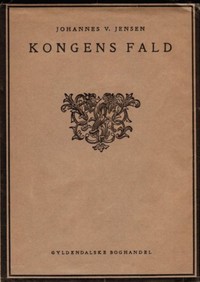
Kongens Fald by Johannes V. Jensen
Let's get one thing straight: this is not a cheerful book. But if you're ready for something raw and powerful, it's unforgettable. Johannes V. Jensen, a Danish Nobel Prize winner, wrote this epic at the start of the 20th century, but he set it in the 16th—a time of war, plague, and massive change. He uses that turbulent backdrop to explore a single, troubled life.
The Story
We meet Mikkel as a young man at university, already full of himself and his potential. He sees himself as a hero from the old sagas, destined for greatness. The story follows him as he leaves Denmark, gets tangled in wars as a mercenary, and drifts through Europe. He experiences love, loss, and violence, but none of it fits the glorious narrative he has in his head. He eventually returns home, but Denmark is being torn apart by civil war and the Reformation. Mikkel finds himself on the losing side, a bystander to history rather than its maker. His life becomes a long, slow confrontation with reality, and it's heartbreaking to watch.
Why You Should Read It
I'll be honest, Mikkel frustrated me for most of the book. He's selfish, often cruel, and blind to his own flaws. But Jensen's writing is so intense and psychological that you can't look away. You start to see the fragile person underneath the arrogance. The book becomes a deep, almost cruel study of human disappointment. It's about the gap between the person we imagine we could be and the person we actually are. Jensen's prose is stark and beautiful, even in translation, painting vivid pictures of a harsh, cold world that mirrors Mikkel's inner life.
Final Verdict
This book is perfect for readers who love character-driven historical fiction but are tired of simple heroes. Think of it as the anti-Pillars of the Earth. It's for anyone who's ever grappled with their own expectations. It's demanding, often bleak, but it sticks with you. If you like the psychological depth of Dostoevsky or the bleak beauty of some Scandinavian films, you'll find a lot to admire here. Just don't expect to feel good when you turn the last page—expect to feel like you've witnessed something true.
Legal analysis indicates this work is in the public domain. Enjoy reading and sharing without restrictions.



Joseph Jones
10 months agoI appreciate the objective tone and the evidence-based approach.